
A Heart in Its Absence
by Ana Denysenko
A human’s heart is meant to be stretched and put on the wall. There, in between a polaroid picture from a Friday night out some years ago and a calendar no one flipped in a week, it finds a place of momentary quiet. No one pokes it, or asks to hold it, or chews on it out of habit. I find myself looking at it much more than I thought I would. It grows tired under my constant gaze, to the point where my pupils take its shape and the redness of it comes out of my pores in a saturated blush on my cheeks.
Looking at it feels forbidden: how can something that belongs inside fit so perfectly in the outside world? I carved it out of my chest quite recently, and yet it feels almost natural to not feel it in me. Then, with a subtle movement of my upper body, the emptiness becomes apparent: I stretch my chest in an attempt to wake myself up, and feel the absence of my own heart.
Forbiddenness creates temptation, and as a first step of surrender, I touch it. My fingers leave almost-holes in my dried heart, and I have to be careful: if I put any more pressure, it will crumble into my palm. Each touch invites me to remember, and I shake my head in physical response—let me forget. The memories puncture blood vessels and flood the chambers, leaving no room for emotional digestion. The heart on the wall becomes nauseous and throws up in front of me. The bloody mush streams down the cracks in the paint, and I stop it with my sleeve.
The palpable pain of the heart is one of the cruelest kinds: I point at my chest, then at the wall, and the tip of my finger recognizes sameness. If the inside and the outside are so similar, maybe I don’t want it back anymore. I look at it, hanging there, and it looks right back at me as I chew pieces of food that have no taste and no texture. I swallow, and the hot, sticky mass travels down my throat, sliding past the hole where my heart once was. It feels good to not have it there.
Mornings and nights on the other side of my window blur into a comfortably heartless life. Heartache and heartbreak become simply ache and break — without a heart, there is no place for them to stay. They gather at the wall, seeping into the splashes of reddish paint in front of them. I stand behind with a quiet fear that they will stay. Maybe, they will find a way to get in through all the other cracks in my mind, if not through the heart. I do not move to stop them. I do not move at all.
The door of my fridge doesn’t close fully, letting the maple-yellow light exit and spill inside the room. I watch my heart glisten in it. I reach inside my chest and feel nothing. It is soft, almost calming. I turn my head back to the wall, and the drying heart enters my peripheral vision. All the time from the clocks in the surrounding apartments passes through me.
Tick. I don’t want my heart back.
Tock. I stretch my arms and feel the air brush through my ribcage.
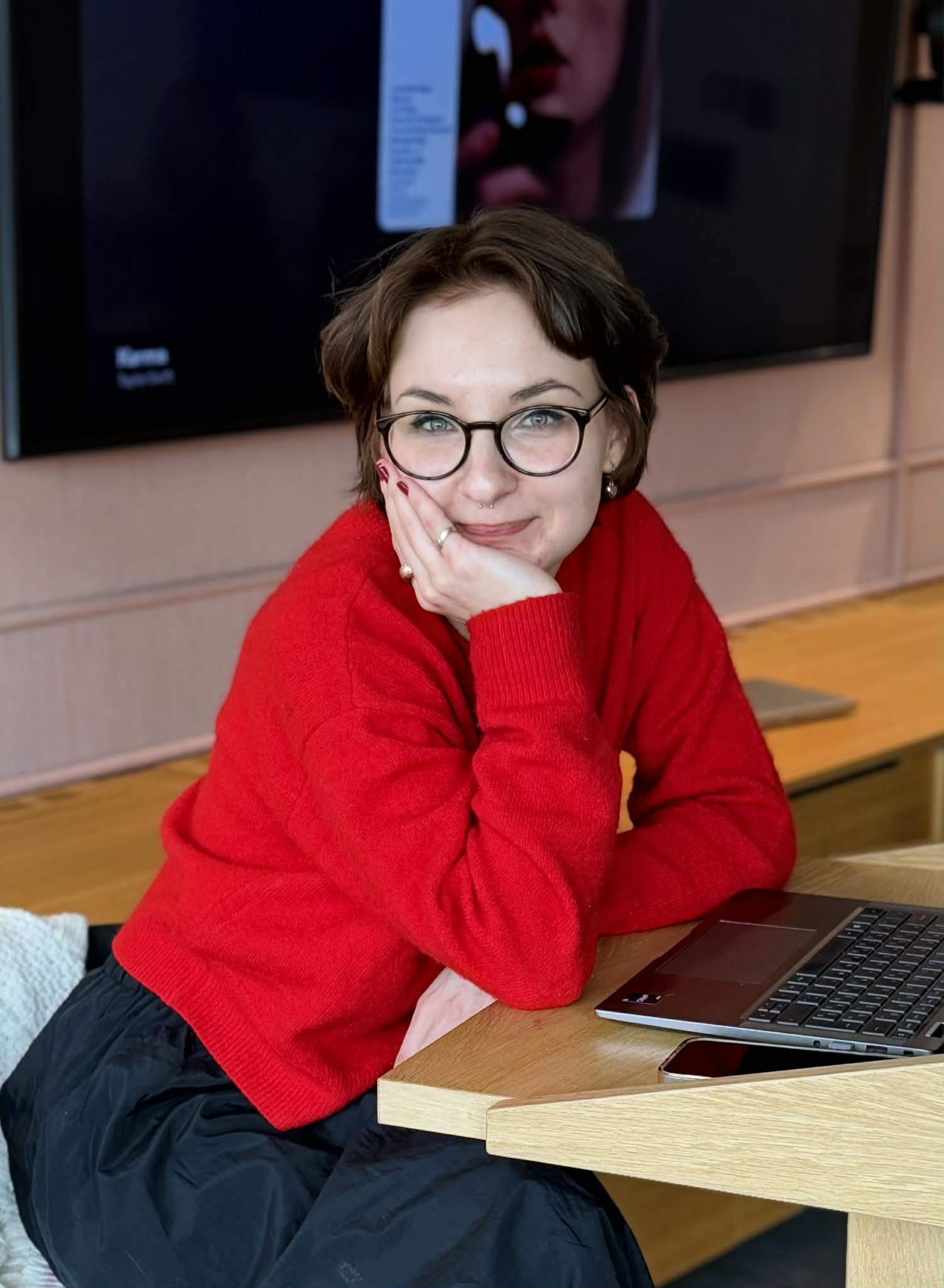
Ana (Anastasiia) Denysenko is an aspiring writer of Ukrainian origin. For the past 5 years, she has been living and studying in Budapest. She contributed to Panel magazine and to the "Narratives of Budapest". Ana’s writing explores the search for meaning, a sense of place to call home, and the complexity of humans’ emotions.
Leave a Reply