
The Weight of Bread
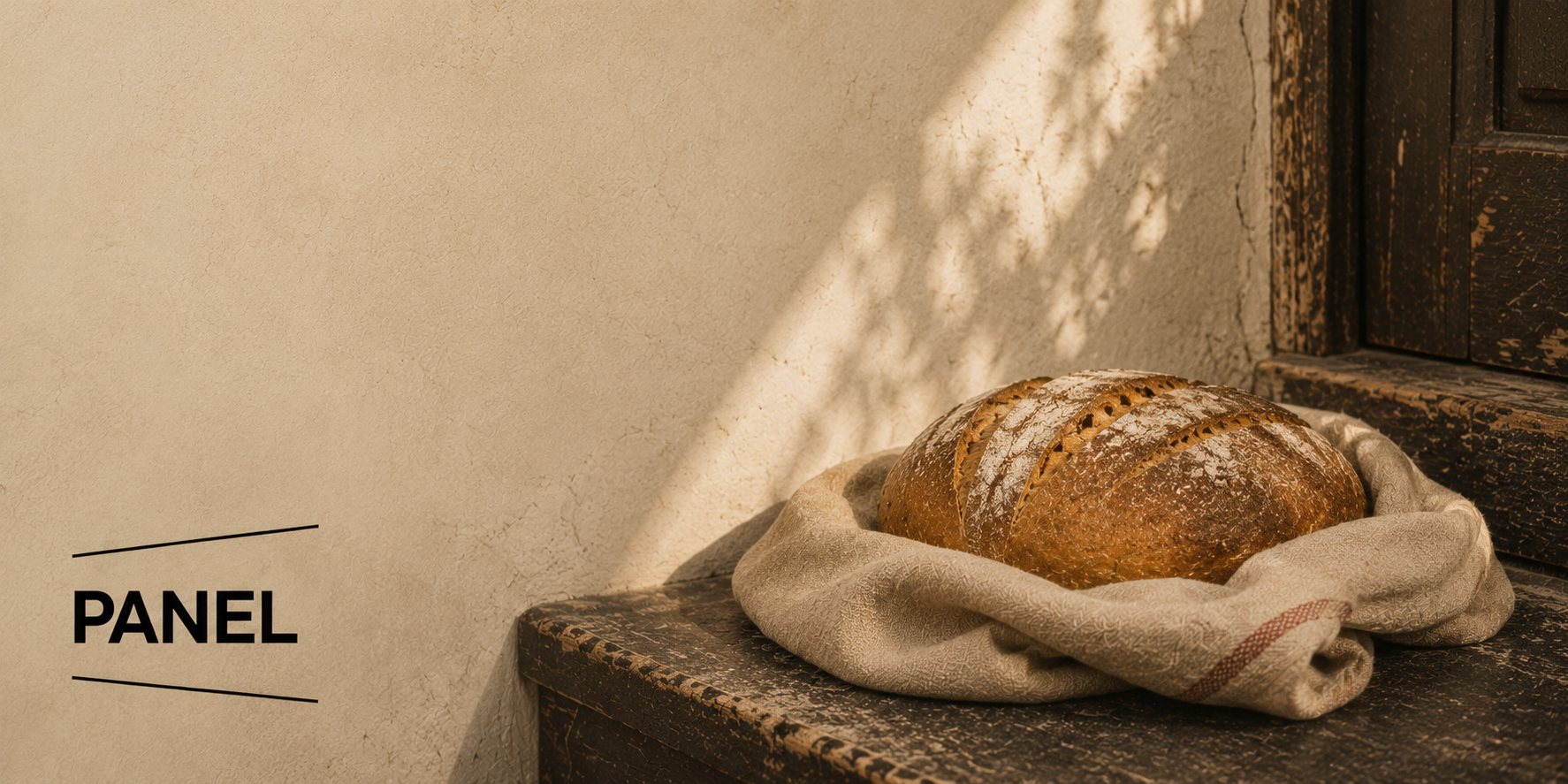
The Weight of Bread
KY-oh Rangi
Every Sunday, Pani Kowalska baked two loaves instead of one, though she had lived alone for eleven years.
The first she kept. The second she wrapped in a clean cloth and set on the landing outside her door, still warm enough to fog the plastic if you covered it too soon. She never labeled it. She never waited to see who took it. By the time the building woke, it was always gone.
The older tenants had stopped wondering aloud years ago. The newer ones assumed a cat, or a superstition, or or an old woman's habit, fraying gently at the edges the way habits do once there's no one left to notice.
Marek moved into 3B in October — a delivery driver, new to the city, working nights, knowing no one. The first Sunday he found the loaf on the landing he stood over it a long moment, certain it belonged to someone, before deciding that a thing left in a hallway with no name on it belonged to whoever found it first. He was hungry, and it was still warm, and he told himself that was reason enough.
He never saw who left it. He worked nights; she, it seemed, rose early. Their hours crossed only on that narrow landing, in the bread's brief window of warmth, and never in person.
The second Sunday he left a jar of his mother's plum preserves outside his own door, unlabeled, the way the bread had been. He didn't examine the impulse too closely. It felt less like a gift than a reply.
By the third Sunday, the jar was gone, and beside where the bread had sat was a scrap of paper in careful, old-fashioned handwriting — a recipe for barley soup, no signature, the measurements given the way you'd give them to someone who already half-knew how to cook.
He tried the recipe. It was good. He left a note beside his empty jar the next Sunday: too much salt, maybe — but good. He didn't know if she could read it in the dark before the building woke, or if she read it at all.
This went on through November. Bread, preserves, a folded page of instructions for pierogi that specified don't rush the dough, it will tell you when it's ready — small transactions with no names attached, conducted entirely in the grammar of a shared threshold, never once in person. He began to recognize her handwriting the way you recognize a voice. He never once knocked on her door to say thank you. It did not occur to him that this was strange until much later, and by then it had simply become how Sundays worked.
He built a small, wordless idea of her — a woman precise about salt, patient with dough, generous in a way that required no acknowledgment to function. He never tried to make it more accurate than that. Some pictures are better left at the resolution they arrive in.
The second Sunday of December, there was no bread.
He told himself she was late. He waited on the landing an hour, then knocked on 3A, softly, the way you knock on a door you've never had reason to knock on before.
No answer. No sound of a kettle, no radio through the wall, nothing.
He knocked again, harder this time, and said her name — a name he only knew from the building's row of mailboxes downstairs, never spoken between them, not once, in two months of Sundays.
Nothing answered him but the cold coming up the stairwell.
He sat down on the landing with the jar of preserves he'd meant to leave that morning, still in its paper wrapping, and waited — for a sound, a smell of bread, anything — the way you wait for someone you have never once seen. This Sunday, for the first time, her absence would not let itself be called habit.
Leave a Reply